
It’s algae, not dirt
The dark streaks running down so many roofs around Wilmington are a type of algae that feeds on the limestone filler in asphalt shingles. It starts on the shady, north-facing side and spreads, especially under trees and near the water.
Why it’s worth cleaning
Beyond curb appeal, the streaks are often followed by moss and lichen, which hold moisture against the shingles and can lift their edges. A dark roof also absorbs more heat. Many homeowners notice it when selling or when an HOA sends a letter.
Why you shouldn’t pressure wash a roof
High pressure knocks loose the granules that protect shingles from the sun, can break tiles and can force water under flashing. It also only removes the surface growth, so the streaks return quickly.
How roof cleaning works
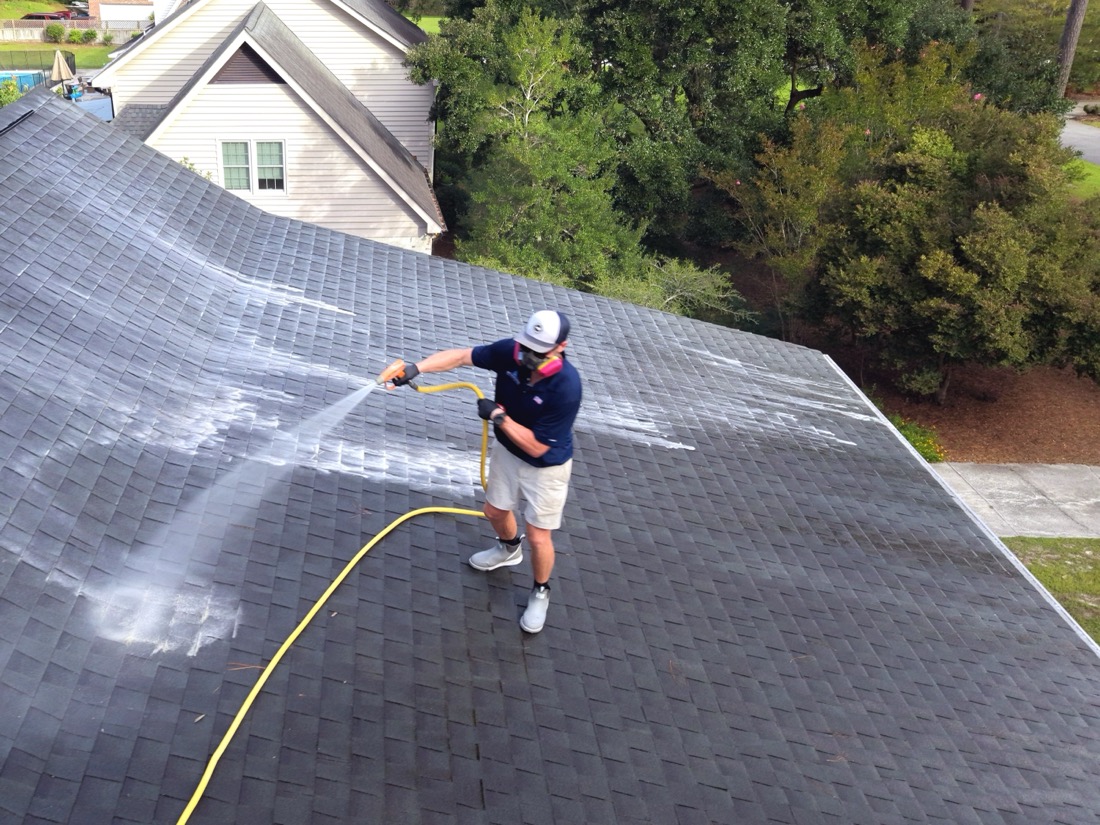
A proper roof cleaning is a soft wash: a cleaning solution applied at low pressure kills the algae and moss at the root, and a rinse carries it off. Some streaks fade completely over the following days as the dead growth washes away in the rain. We wash shingle, tile and metal roofs this way, from the ground or by drone where a roof is too steep or high to walk.
How often
Most roofs here stay clean for one to three years after a soft wash. Shaded roofs and homes close to the water tend to need it sooner.
Protecting the yard
Before we start we wet and cover plants under the roof line, and we rinse them again after. Gutters full of growth get rinsed out as part of the job.
Want a price for your home? Tell us what needs washing and Cameron will come back with an accurate, free quote, usually the same day.
Related: Roof cleaning · Soft washing · Drone washing